Orleans County Deed Records and What They Show
The official Orleans County source and its verification limits are described in this section.
| Deed Type | What It Does | Common Use |
|---|---|---|
| Warranty deed | The official Orleans County source and its verification limits are described in this section. | The official Orleans County source and its verification limits are described in this section. |
| Quitclaim deed | The official Orleans County source and its verification limits are described in this section. | The official Orleans County source and its verification limits are described in this section. |
| Grant / special warranty | The official Orleans County source and its verification limits are described in this section. | The official Orleans County source and its verification limits are described in this section. |
| Trustee / executor deed | The official Orleans County source and its verification limits are described in this section. | The official Orleans County source and its verification limits are described in this section. |
| Tax deed | The official Orleans County source and its verification limits are described in this section. | The official Orleans County source and its verification limits are described in this section. |
The official Orleans County source and its verification limits are described in this section.
The Orleans County Grantor-Grantee Index
The official Orleans County source and its verification limits are described in this section.
- The official Orleans County source and its verification limits are described in this section.
- The official Orleans County source and its verification limits are described in this section.
- The official Orleans County source and its verification limits are described in this section.
- The official Orleans County source and its verification limits are described in this section.
- Grantor
- The official Orleans County source and its verification limits are described in this section.
- Grantee
- The official Orleans County source and its verification limits are described in this section.
- Chain of title
- The official Orleans County source and its verification limits are described in this section.
- Book/Page vs Instrument #
- The official Orleans County source and its verification limits are described in this section.
Getting a Copy of a Orleans County Deed
The official Orleans County source and its verification limits are described in this section.
Recorded, not guaranteed. The official Orleans County source and its verification limits are described in this section.
Orleans County Deed Records Start at the Clerk
Every town and village in the county records with the Orleans County Clerk. The office sits at 3 South Main Street, Suite 1 in Albion. The Clerk takes in deeds, mortgages, assignments, discharges, maps, judgments, federal tax liens, and correction instruments. Start with the Tyler land-record portal. Treat it as a guide. Its own disclaimer says it is not the certified repository. No first online year is published. When the portal runs dry, older Orleans County deed records live in the Clerk's books. Reverse indexes, maps, and staff-assisted counter service also hold them.
Hours shift with the seasons. Recording cuts off thirty minutes before closing. Confirm the schedule before you travel. Bring an exact name, an approximate date, the SBL, and any known book and page.
Match the Instrument to the Orleans County Question
Each instrument tells its own story. A deed conveys an interest in land. A mortgage only secures debt; it never makes the lender the owner of record. An assignment shifts which party holds the mortgage. A discharge shows the recorded mortgage was released. Easements, filed maps, corrections, judgments, and federal tax liens can also appear in Orleans County property records. These can all shape a property's history without transferring anything. Read the instrument type before you draw conclusions about ownership.
| Instrument | What to examine | Next cross-check |
|---|---|---|
| Deed | Grantor, grantee, date, legal description | Roll owner and book/page |
| Mortgage | Borrower, lender, amount, property | Assignments and discharge |
| Filed map | Lots, roads, dimensions, filing reference | Current SBL and survey |
| Correction | What prior instrument is changed | Both recordings |
Walk Orleans County Deeds Backward
Start with the latest assessment owner. The deed book and page are printed on the roll. Find that person's acquisition deed as grantee. Copy the grantor, recording date, instrument type, legal description, and prior reference from the deed. Then search that grantor as an earlier grantee, and repeat the loop. At every link, compare acreage, map and lot, and adjoining owners. Also compare road or creek calls and the prior book and page. Similar names alone never prove two instruments concern the same land.
Estate transfers can break a tidy name chain. Search the decedent, the estate, and any executor, administrator, trustee, or fiduciary deed. Surrogate's Court papers may explain who had authority. But the later recorded deed documents the conveyance itself.
Book and Page Connect the Roll to the Clerk
Orleans assessment-roll samples include a deed book and page field. That field makes a handy bridge from the current tax record to the recorder. Copy it exactly. Then confirm that the grantee, parcel description, and situs all agree. Parcel numbers change after splits or combinations. The legal description and filed map often preserve the chain. No book and page appears sometimes. Search owner name variants within a tight date range instead.
Consideration or transfer-tax data can help identify a transaction. But the assessment's full-market value is not the sale price. Never infer consideration from a ratio calculation. Read the recorded instrument and any related transfer evidence for the real number.
Canal-Era Orleans County Deed Descriptions
Old property descriptions mention mills, locks, farms, roads, creeks, and neighboring proprietors. They do not use street addresses. Orleans County formed in 1825, and canal development shaped both Medina and Holley. Search the County Historian's 1894 Landmarks of Orleans County and historic newspapers for former property or business names. Then carry those clues back to the deed books and maps. Directories and articles can establish a lead or an occupant, not legal title.
The Clerk publishes no exact online cutoff, and any courthouse-loss history takes asking. Avoid guessing a year. Ask the Clerk for help. Ask which book, index, microfilm, or archive holds the next link in your chain.
Audit an Orleans County Deed Result
Every Orleans County deed result deserves a careful audit before it enters a chain of title. Start with the index entry, transcribing the grantor and grantee exactly, along with the instrument type, execution and recording dates, and the book and page or instrument number. Add the municipality, consideration, and prior references. Then read the recorded image whenever one is available. Indexes abbreviate names and describe instruments loosely; the recorded document holds the legal description, easements, exceptions, and acknowledgments, and when no image appears online, order the official copy from the Clerk.
Next, compare the description against the subject parcel. A street address may not appear at all. Rely on lot and map numbers, acreage, courses, roads, waterways, adjoining owners, and the prior deed. Watch for splits. A divided parcel calls for identifying the parent tract and the filed map that created the new lots. Corrective deeds need special handling: keep the original and the correction side by side, and note exactly what changed.
Build the timeline in separate tracks. The ownership line carries deeds and qualifying estate conveyances. The financing line carries mortgages, assignments, modifications, and discharges. Judgments and liens belong in an encumbrance line, and a lis pendens stays in a court line until an outcome and later deed confirm it. Separating these tracks keeps a lender, plaintiff, or fiduciary from being mislabeled as the owner of record. That single error can derail an entire title review.
Certified copies matter for court use and closing work. Fees vary by service, so check the Clerk's current fee schedule or ask staff directly. Skip undated third-party price lists. Coverage deserves the same caution. With no published first online year, the historical chain of Orleans County property records cannot be limited to what a portal shows.
Canal-era records reward exact vocabulary. A mill, lock, farm, proprietor, or road named in an old instrument can become the search term linking a historic notice to a modern parcel. Historians and newspapers generate leads, but Clerk books and filed maps supply the recorded chain.
Court Filings Supplement the Deed Timeline
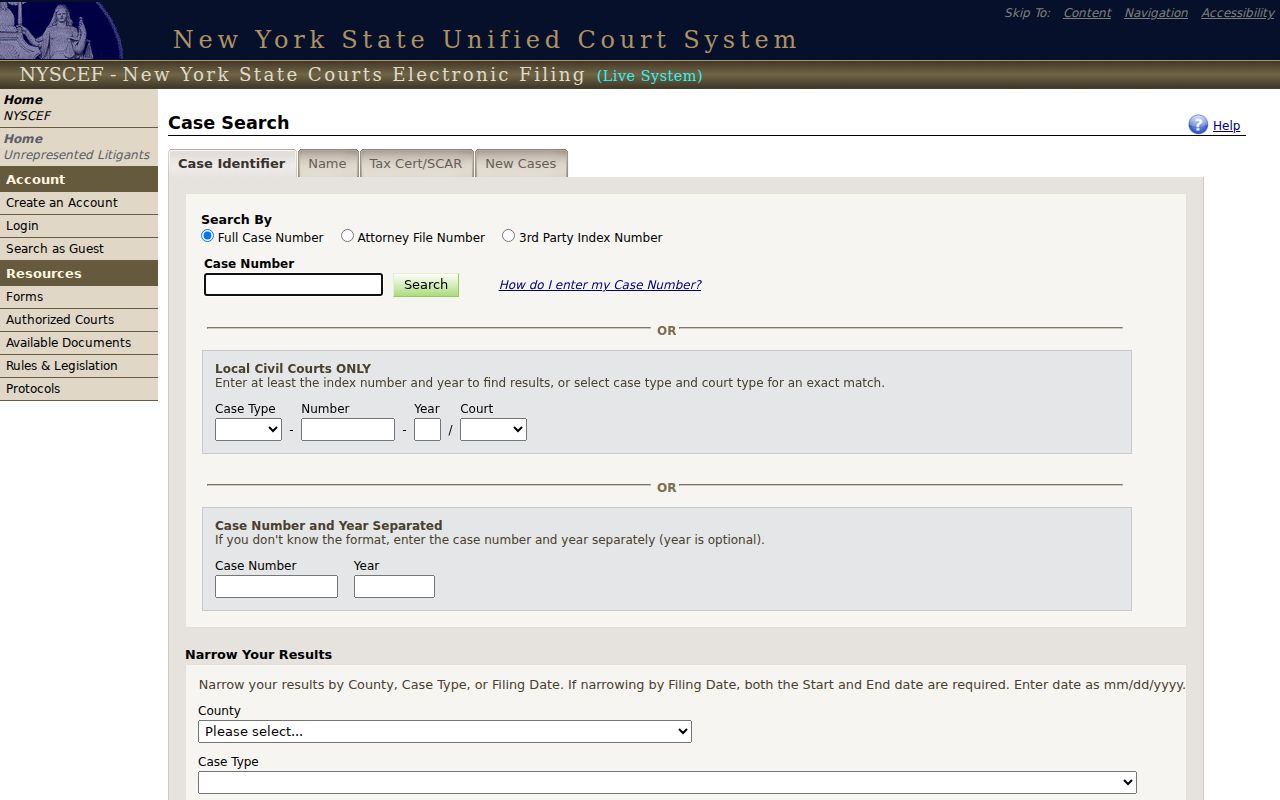
Foreclosure, quiet-title, and partition cases in Orleans County can surface through the official NYSCEF search, using the controls the system displays. A court filing supplements the Clerk record. It is not proof of a completed conveyance.