
What Orleans County Property Tax Records Show
The official Orleans County source and its verification limits are described in this section.
| Field | What It Shows | Where |
|---|---|---|
| Assessed value | The official Orleans County source and its verification limits are described in this section. | The official Orleans County source and its verification limits are described in this section. |
| Market / appraised value | The official Orleans County source and its verification limits are described in this section. | The official Orleans County source and its verification limits are described in this section. |
| Exemptions | The official Orleans County source and its verification limits are described in this section. | The official Orleans County source and its verification limits are described in this section. |
| Tax bill & status | The official Orleans County source and its verification limits are described in this section. | The official Orleans County source and its verification limits are described in this section. |
| Taxing districts | The official Orleans County source and its verification limits are described in this section. | The official Orleans County source and its verification limits are described in this section. |
The official Orleans County source and its verification limits are described in this section.
Looking Up a Orleans County Tax Bill
The official Orleans County source and its verification limits are described in this section.
- The official Orleans County source and its verification limits are described in this section. by address or parcel]
- The official Orleans County source and its verification limits are described in this section.
- The official Orleans County source and its verification limits are described in this section.
- The official Orleans County source and its verification limits are described in this section.
- Assessed value
- The official Orleans County source and its verification limits are described in this section.
- Mill rate / levy
- The official Orleans County source and its verification limits are described in this section.
- Homestead exemption
- The official Orleans County source and its verification limits are described in this section.
- Tax lien
- The official Orleans County source and its verification limits are described in this section.
Appealing a Orleans County Assessment
The official Orleans County source and its verification limits are described in this section.
Appeal window. The official Orleans County source and its verification limits are described in this section. with the The official Orleans County source and its verification limits are described in this section.; missing the window means waiting for the next cycle.]
What an Orleans County Assessment Roll Shows
Every parcel in Orleans County starts its tax story on the annual assessment roll. One row can carry the SWIS and SBL numbers. It can also carry the current owner of record, mailing and situs addresses, property class, school district, acreage, land assessment, total assessment, full-market value, exemption codes, and taxable value for each jurisdiction. You may also spot special districts, an account number, and grid coordinates. The deed book and page tying the parcel back to deed records may appear too. Before comparing any figures, check the roll year, valuation date, taxable-status date, and uniform percentage. A roll reflects one point in the assessment cycle. It is not a live title ledger.
The Real Property Department maintains the county's tax maps and rolls. It also backs up local assessors. Tax bills for all ten towns begin through the county's BAS links. The Treasurer, meanwhile, handles unpaid taxes, tax liens, foreclosure, and county-owned property.
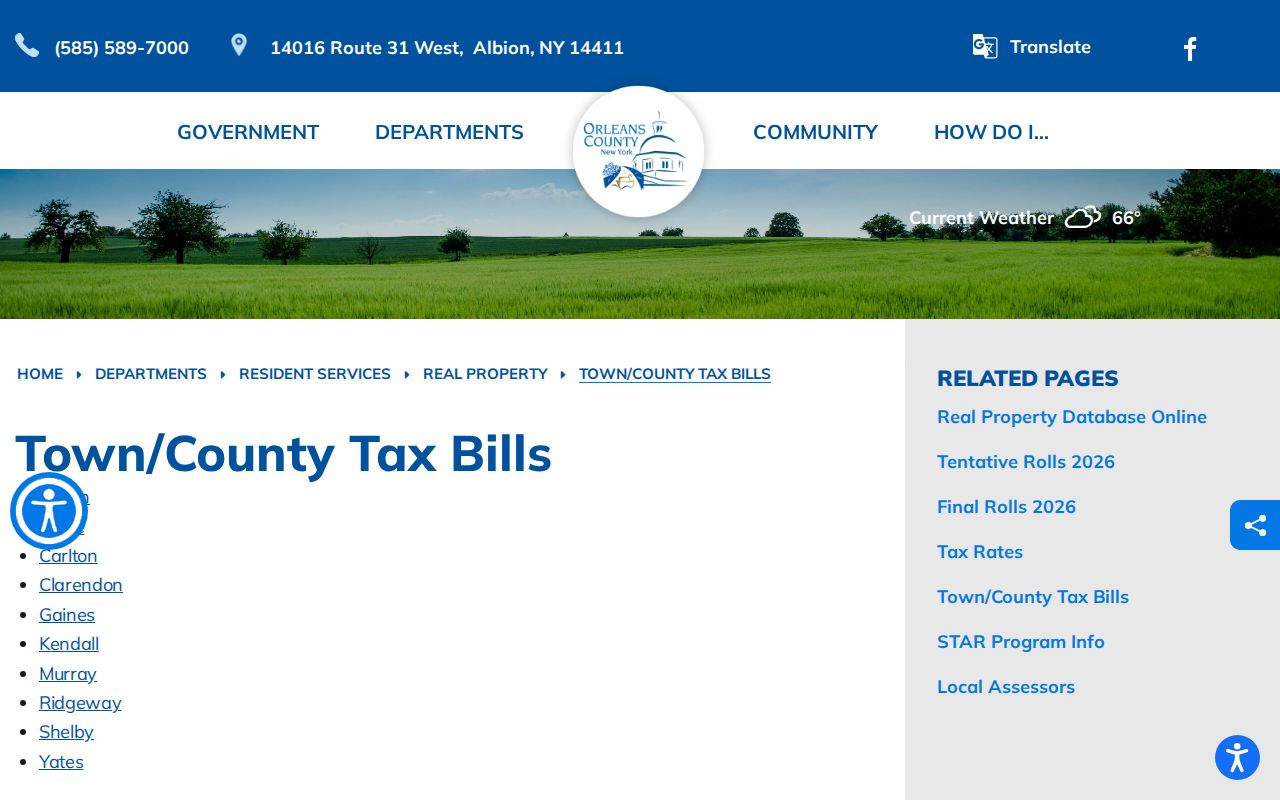
The official county tax-bill page routes you to each town's bill system separately. Orleans County points users to town-specific portals rather than a single countywide bill screen.
Separate Assessed, Market, and Taxable Figures
Three figures get confused constantly. Total assessment is the assessor's number before levy-specific exemptions. Full-market value is an estimate produced inside the assessment system, not a recorded sale price. Taxable value is what remains once exemptions apply. It covers a county, town, village, or school levy. A Medina row can print several taxable columns. They need not match. STAR can cut school taxable value while leaving another jurisdiction's base untouched.
One Kendall example shows a $177,500 assessment against a $204,000 full-market value on six acres. It illustrates the fields and nothing more. An actual property's sale price has to come from recorded transfer evidence. Don't copy the example or convert another town's ratio.
Orleans County Assessment Levels Vary by Town
Assessment levels differ town by town. The 2025 state market-value survey put Albion and Gaines at 95 percent, Kendall at 87 percent, Ridgeway at 90 percent, and Murray at 61 percent. Each ratio belongs to a stated year and municipality. Ridgeway's 2024 roll used a 97 percent uniform percentage. Later state material listed other context along with a 2026 reassessment. Label the source year on every figure. Mixing them as if they described one moment leads nowhere.
The assessor route varies as well. Albion and Gaines rely on county staff for assessment service. The county directory lists local routes for the remaining towns. A village name in the address does not create a separate city assessor.
Grievance and the Orleans County Calendar
New York's standard assessment challenge runs on form RP-524. The deadline generally centers on the fourth Tuesday in May. Local dates and filing arrangements deserve confirmation each year. The roll's July 1 valuation date and March 1 taxable-status date also shape the calendar. They explain why evidence should match the right valuation period. Keep the matters separate. A valuation grievance, an exemption question, and a tax-payment dispute are not the same thing. They may sit with different custodians.
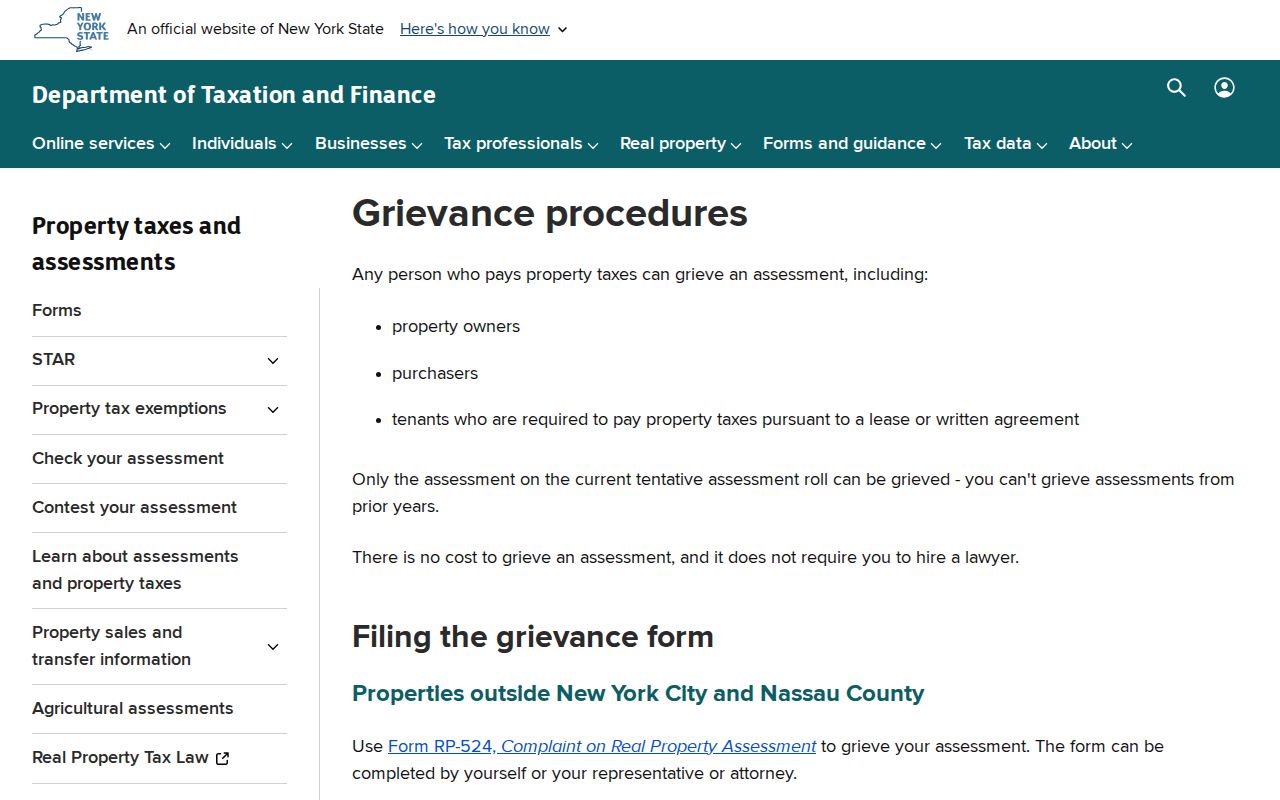
The state grievance procedure walks through RP-524 and the Article 7 review that can follow. That helps distinguish administrative review from any attempt to change a deed or tax bill.
A Tax Bill Is Not a Tax Lien
A BAS bill screen speaks to one levy and its payment history. A delinquency can slide into Treasurer enforcement. The lien or foreclosure instrument itself may show up in Clerk or court records. A late bill is not a completed lien or foreclosure. Check the Treasurer, the recorded instruments, and NYSCEF depending on the question. Remember that a notice of pendency signals pending litigation rather than a finished transfer of ownership.
Keep the details bundled: parcel SBL, tax year, bill number, amount components, payment status, and check date. Comparing like years and jurisdictions keeps a village amount from masquerading as a county-wide total.
Audit an Orleans County Tax Record
Start with an exact match. Line the bill or roll up against the precise SBL, town, and levy year. Copy the assessment, every exemption, each taxable value, the tax components, and the payment status. Keep county and town amounts separate from school or village charges. A payment screen answers a bill question, while the assessment roll explains the value base. Neither record alone tells you whether a deed was just recorded.
Then compare the annual roll with the bill. The owner name may be printed for billing convenience even while a recent conveyance works through the assessment cycle. The printed name can lag behind the deed. The SBL is usually the better bridge. When a parcel was split or merged, consult Real Property and the filed map. Avoid forcing an old bill onto a new parcel number. Preserve both identifiers and their effective years.
Exemption codes demand a year-specific explanation. One roll prints BAS STAR code 41854 as an example. Eligibility and amounts can change. Read the current state and local material. Pin down which levy receives the reduction. Never subtract a school exemption from a town figure or describe taxable value as market value.
Unpaid amounts point elsewhere. Begin with the town or BAS bill source. Then ask the Treasurer about enforcement status. If a recorded lien or foreclosure is alleged, check the County Clerk and NYSCEF. A delinquent account, a lien, a notice of pendency, a judgment, an auction, and a deed are separate events. State only the stage the record itself establishes.
A fair year-to-year comparison holds the parcel, the municipality, and the columns constant. List the valuation date, taxable-status date, uniform percentage, land assessment, total assessment, and full-market estimate. List the exemptions and taxable values too. Explain any reassessment or ratio change with a cited year. That method beats comparing two bottom-line tax bills that may carry different rates, exemptions, or jurisdictions.